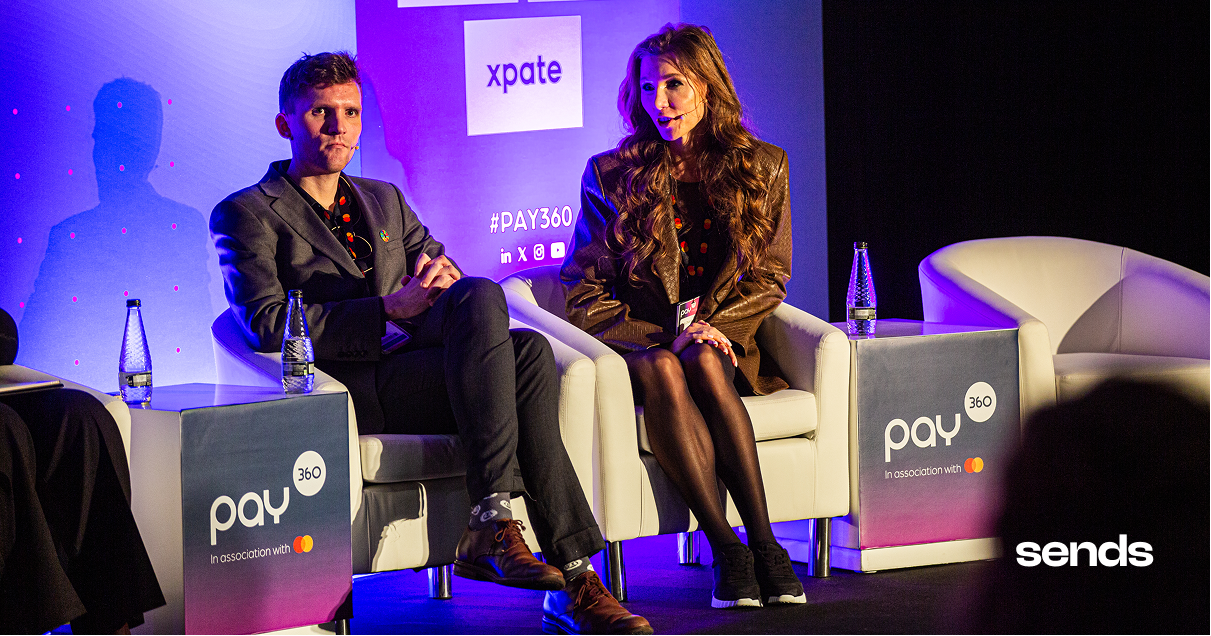
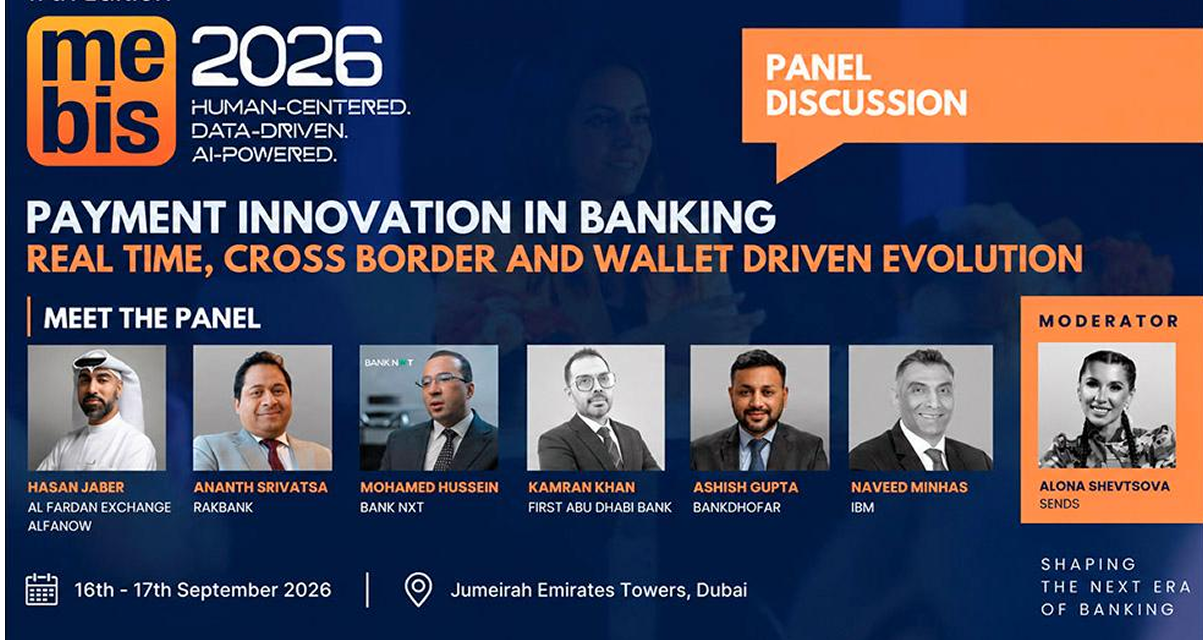
Sends CEO Alona Shevtsova speaks at key panels at PAY360
Sends CEO Alona Shevtsova joined two expert panels at Pay360 2026 in London, contributing to some of the event’s most closely followed conversations about the role of artificial intelligence in financial compliance and the commercial maturation of embedded finance.
AI was the defining theme of Pay360 2026. From risk management to customer onboarding to fraud detection, virtually every conversation in the hall circled back to how machine intelligence is changing what financial services look like in practice. Embedded finance ran a close second — and it was on both of these stages that Alona Shevtsova appeared.
Panel one: “The agentic AI tsunami - revolutionising compliance via AML and KYC”
The first session brought together a panel of practitioners and strategists to examine how AI is reshaping compliance infrastructure — specifically in anti-money laundering and know-your-customer processes. The discussion moved well beyond theory, with speakers drawing on live deployments, regulatory expectations, and the practical challenges of embedding AI into regulated environments.
Alona Shevtsova was joined by Jonathan Greenstein from The Lagom Consulting, Bushra Saba from Lloyds Banking Group, Dane Pedro from Mollie and Michael Borelli, Director at AI & Partners.
“AI is no longer a future concept — it is already reshaping how financial institutions manage and predict risk, compliance, and customer experience. At the same time, embedded finance is redefining how and where financial services are delivered. The real value lies in combining these innovations with strong governance and a clear business focus,” commented Alona Shevtsova.
For Sends, the subject is directly relevant. As an FCA-authorised Electronic Money Institution processing cross-border payments for business clients, maintaining robust AML and KYC standards is not a compliance checkbox — it is foundational to what the business does. Alona brought that perspective to the panel: grounded in operational reality, and focused on what it actually takes to deploy AI responsibly within a regulated payments environment.
Panel two: “Fireside chat — embedded finance: from buzzword to business model”
The second session took a broader commercial lens. As embedded finance moves from industry talking point to revenue-generating product line, the questions have shifted: not whether it works, but how to make it scale, who owns the liability, and where the genuine margin sits.
The panel covered real-world use cases, commercial structuring, and the infrastructure requirements that underpin embedded finance at scale. For Sends, this is live territory: the company’s cross-border payment infrastructure is already embedded into third-party platforms and products, and the trajectory for that capability continues to grow.
A strong showing across the floor
Beyond the main stage, the Sends team was active throughout both days of the event. Delegates held conversations covering business development, marketing, compliance, and partnership opportunities with a wide range of visitors - from early-stage fintechs to established financial institutions. New connections were made, introductions were had, and many follow-on conversations are already in progress.
Pay360 has always been one of the more productive fixtures in the payments calendar, and this year delivered on that reputation. The density of serious, senior people in one place — and the quality of what happens when you get them talking — is genuinely difficult to replicate.
What’s next
Sends has already confirmed its return to Pay360 in 2027, with new products and a broader team presence planned. In the meantime, the company continues to expand cross-border payments offering for SMEs across the UK and is preparing for the launch in Europe.